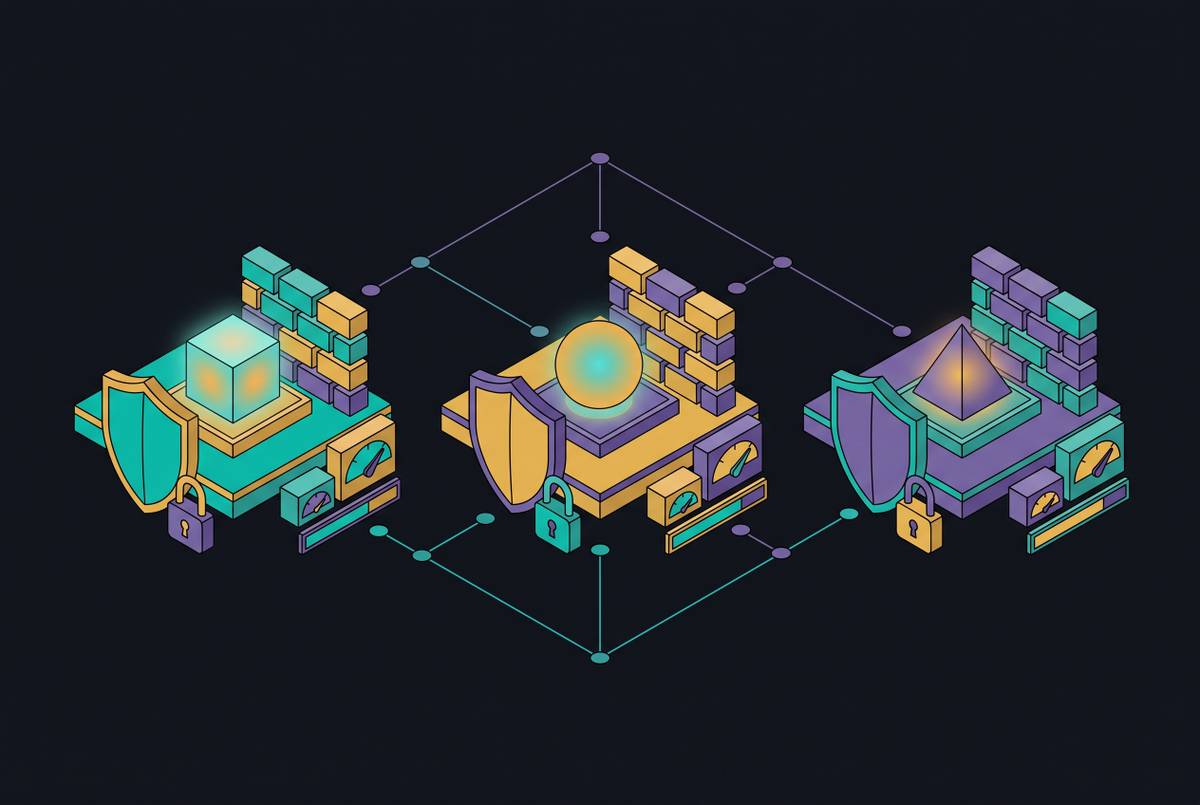
AI Coding Assistant Security Comparison for Enterprise Procurement
Four coding assistants face a security test standard procurement checklists cannot pass.
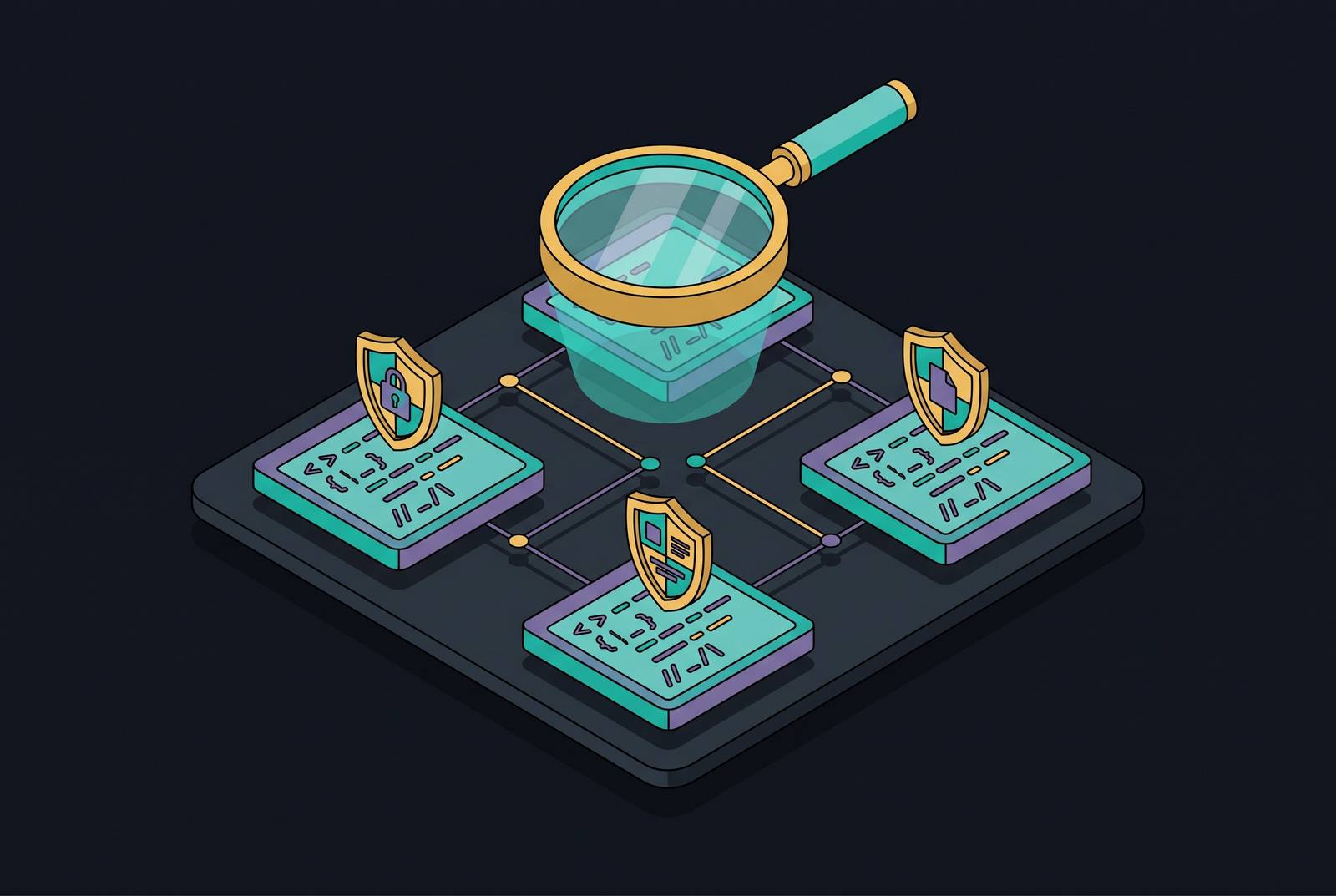
Enterprise procurement of AI coding assistants requires two decisions, namely which tool meets the organization’s security needs and how to monitor the risks that remain after approval. This comparison evaluates four assistants across five security dimensions and considers Promptarmor as a separate vendor-risk monitoring layer. Enterprise controls matter, but an enterprise label or a completed vendor scorecard cannot make AI-generated code and agentic workflows safe.
Why standard procurement scorecards miss AI coding assistant risk
A coding assistant passes vendor due diligence, joins the approved list, and then introduces a risk the scorecard never asked about. The assessment covered SOC 2 attestation, a data processing agreement, and access controls. Those checks matter, but they concern the vendor’s security posture rather than the safety of everything its product writes or executes.
The risk has two sides. The assistant is a vendor asset that can suffer a supply chain attack, while its output is untrusted code entering the organization’s own software supply chain. Manual review and post-commit scanning have more work to do as AI-assisted development speeds up. Checks on vendors at set times miss that distinction, even when the procurement team carries them out carefully. The missing assessment concerns both the supplier and the vulnerability surface its tool creates.
The five security dimensions that a proper evaluation must cover
Code quality and vulnerability rate is the first dimension. Models can reproduce insecure patterns, including SQL injection, cross-site scripting, missing input validation, and weak cryptography, because functional correctness is not the same as security. Procurement needs to establish whether the assistant gives inline security feedback or leaves that work to external tools.
Data handling and transit exposure is the second dimension. Zero data retention is a guarantee in a contract, but it cannot stop an attacker from reading code on compromised vendor infrastructure. The assessment must establish where inference happens, who operates that infrastructure, and whether VPC-isolated or air-gapped deployment is available.
Prompt injection and agentic attack surface is the third dimension. An assistant that reads files and runs commands exposes more than a text-completion interface. Its permissions, sandboxing, and Model Context Protocol (MCP) connections define how far an attacker’s instructions could reach.
Supply chain risk from hallucinated dependencies is the fourth dimension. Assistants can recommend packages that do not exist, creating an opening for attackers to register those names as malicious packages, a practice called “slopsquatting”. Repeated hallucinated names make that opening predictable, so dependency coverage must extend to transitive dependencies and suspicious package names at the PR stage.
Compliance and audit controls is the fifth area to check. Audit logging, AI attribution, and data residency controls support investigation and reporting, but they are not interchangeable. The European Commission’s CRA reporting page specifies 24-hour early warning and 72-hour full notification deadlines without requiring a determination of whether a human or AI introduced the vulnerability. Attribution can help teams investigate even though the reporting rules do not say they must have it.
Why the agentic shift makes prompt injection the most urgent new criterion
The shift from autocomplete to agents changes the consequence of a bad instruction. An autocomplete tool suggests text, while an agent can read files, run commands, and connect to external systems. An agent can thus treat repository context as an instruction to act. That is why prompt injection now belongs in the assessment of both code-execution risk and content quality.
The “IDEsaster” report documented more than 30 related flaws across coding assistants. The report also described a case-sensitivity bypass in Cursor’s file-access controls.
Content filtering cannot stop these attacks on its own because hostile instructions in a repository file or PR description may look unlike a direct adversarial prompt. MCP connections extend the trust boundary again, while CASB and SSE tools built around web traffic miss IDE-native, CLI, and MCP traffic. The practical consequence is a visibility gap around the agent’s execution path. Procurement must ask vendors specifically what constrains agentic permissions, rather than treating data retention terms as the answer.
How GitHub Copilot performs against the five criteria
GitHub Copilot’s Business and Enterprise tiers provide a mature baseline for cloud-hosted enterprise controls. For code quality, though, code generation has no inline security feedback by default, so teams still need external SAST coverage. Native security review is also available through the /security-review command, a distinction from automatic inline feedback. GitGuardian research found that repositories using Copilot leak secrets at a measurably higher rate than repositories without AI assistance. That correlation makes the code entering repositories a separate assessment concern alongside the vendor’s handling of submitted data.
For data handling, teams need to check closely what contractual non-retention and content exclusions cover. Exclusions do not cover every editor mode, including Edit and Agent modes of Copilot Chat. On prompt injection, CVE-2025-53773 (CVSS 9.6), CamoLeak, and RoguePilot establish concrete exposure, but do not erase the value of enterprise controls. They show why teams need to check those controls where the code runs.
On supply chain risk, Copilot has no native hallucinated-package detection, leaving external SCA tooling to cover that gap. Its compliance and audit controls are the strongest enterprise baseline in this comparison, with SOC 2 Type II, CSA STAR Level 2, and PCI DSS attestation available. Those attestations support due diligence, with generated-code safety outside their scope. Business costs $19/user/month and Enterprise costs $39/user/month.
How Cursor performs against the five criteria
Cursor offers model flexibility, using Anthropic, OpenAI, or Google depending on selection. That flexibility also means code quality varies with the selected model. It has no native security scanning, so external SAST is required. Developer preference for its capabilities is therefore a separate consideration from the security controls procurement must supply.
Privacy Mode is a meaningful data-handling control because it addresses retention at the model-provider level. It does not remove cloud transit exposure or the documentation work created by multi-vendor inference routing. Procurement must account for multiple sub-processors rather than treating Cursor as a single infrastructure boundary. Its cloud-only architecture also rules out an air-gapped answer to a strict data-handling requirement.
For prompt injection, the disclosed case-sensitivity bypass in file-access controls shows why teams need to examine repository-context attacks as agents can do more. On supply chain risk, Cursor has no native hallucinated-package detection and needs external SCA coverage. It has SOC 2 Type II certification, with the latest attestation report dated September 4, 2026, but its audit logging and policy controls fall short of Copilot’s enterprise feature set. The supplied material documents no IP indemnification comparable to Copilot’s offering. Cursor Business costs approximately $40/user/month.
How Amazon Q Developer performs against the five criteria
Amazon Q Developer fits best with a team that works mainly on the provider’s cloud platform and whose data requirements can be met through VPC isolation. That architecture addresses the data-handling dimension more directly than contractual retention terms alone. Native OWASP security scanning also adds code-quality protection, although it does not remove the need for wider application security controls. Because Copilot now offers native security review too, scanning is not an exclusive reason to choose Q.
On prompt injection, the supplied material does not document named Q vulnerabilities in the same category as the Copilot disclosures. That absence is not evidence that expanding agentic capabilities are immune to attack. VPC isolation limits some external-trigger paths, but teams still need to check permissions for file reading, command execution, and MCP connections. Isolation narrows exposure rather than answering every agentic security question.
On supply chain risk, no specific native hallucinated-package detection is documented beyond OWASP scanning, so external SCA remains advisable. For compliance, VPC isolation can support data-residency requirements, but it does not by itself establish the audit or attribution controls a buyer needs. Those requirements remain part of the procurement assessment. Q’s case is consequently strongest for organizations native to the provider’s cloud platform. The Pro tier costs $19/user/month.
How Tabnine Enterprise performs against the five criteria
Tabnine Enterprise changes the data-handling decision through air-gapped deployment. It is the only assistant in this comparison that can eliminate cloud transit exposure architecturally in that configuration. The tradeoff is capability, especially for multi-line suggestions, where local and air-gapped models do not match cloud-based alternatives. For buyers with non-negotiable isolation requirements, that tradeoff is central to the decision.
For code quality, teams must weigh what a less capable model can do separately from the benefits of keeping inference isolated. Tabnine’s Universal model trained on public code uses permissively licensed open-source code and excludes GPL. That training policy deals with a copyright concern that is part of supply chain risk. It does not establish that suggested dependencies are genuine or free of vulnerabilities, so dependency review still has a role.
For prompt injection, air-gapped deployment leaves fewer external-trigger paths open and limits what agents can do. Those benefits depend on where the deployment boundary is, and the product name alone cannot ensure them. For compliance, Tabnine lists SOC 2, GDPR, and ISO 27001 compliance, while air-gapped deployment supports strict data-residency requirements. No code-attribution metadata is documented in the supplied material beyond what the deployment model provides. Tabnine is therefore a specific architectural answer for buyers who prioritize isolation over model capability.
How Promptarmor addresses the vendor-layer risk that tool selection alone cannot close
The comparison reveals a gap that no assistant configuration resolves on its own. Selecting a deployment model and negotiating controls does not provide continuous visibility into a vendor’s changing AI assets. New capabilities, permissions, and connections can alter the approved risk profile between review cycles. The monitoring decision therefore belongs beside the tool decision.
Promptarmor combines vendor risk assessment with AI-specific threat detection and continuous monitoring of vendor AI assets. It says it covers prompt injection exposure, paths for data exfiltration, and compliance risks across the enterprise ecosystem. This addresses the dual problem that traditional TPRM misses, namely a potentially compromised vendor asset and the vulnerability surface created by AI use. It is a complement to tool configuration, SAST, SCA, and secret scanning.
Data handling is one practical place for that complement. Continuous monitoring platforms such as Promptarmor can flag questions about AI-specific vendor risk that link where and how inference runs and data flows to privacy obligations. Enterprises should still require vendors to say where their infrastructure is, how long they keep data, and what air-gapped deployment options they offer. Watching those assets can help teams check whether the assumptions behind the controls they negotiated still hold.
Shadow AI is another reason to keep checking. Unapproved assistants used on unapproved projects create flows that an approved-vendor list cannot govern by itself. Monitoring can also contribute context and an audit trail for investigations, without substituting for the organization’s reporting process or guaranteeing missing attribution metadata. Enterprise tiers and data exclusions remain useful controls, but they are not substitutes for this persistent view of vendor risk.
A procurement decision framework for InfoSec and Legal teams
Start with the data-handling requirement because it can rule out an otherwise capable tool. If policy requires air-gapped or on-premises deployment, Tabnine Enterprise is the option in this comparison that meets it architecturally, with a capability tradeoff to accept or a policy to reconsider. If VPC isolation within the provider’s cloud platform meets the requirement, Amazon Q Developer combines that fit with native scanning. If cloud hosting with contractual non-retention and strong audit controls is enough, Copilot Enterprise has the most mature set of enterprise controls here. Cursor Business with Privacy Mode is an option for teams seeking model flexibility, as long as procurement gets the sub-processor documentation in order and checks the compliance evidence it already has.
Next, add the security controls the selected tool does not supply. Integrate SAST and SCA at the PR stage before merge, including coverage of transitive dependencies and hallucinated package names. Add pre-commit secret scanning to catch credentials that come from suggested code. For agentic deployments, apply least-privilege permissions and assess each MCP server as a new supply chain entry point.
Finally, require compliance evidence and continuous monitoring as part of the purchase. SBOM readiness belongs on the roadmap for the December 11, 2027 mandate, with the September 2026 vulnerability-reporting deadline requiring earlier preparation. Assign the monitoring decision separately so that it does not disappear behind approval of the assistant. Promptarmor is an appropriate option for that vendor-layer requirement because its focus is the changing AI exposure that point-in-time reviews miss. Procurement is complete only when the organization has addressed both the tool it approves and the risks that can change afterward.