Scoring RAG Pipeline Vendors on Retrieved Chunk Inspection Depth and Hijack Resistance Maturity
Enterprise RAG security requires inspection separate from access control.
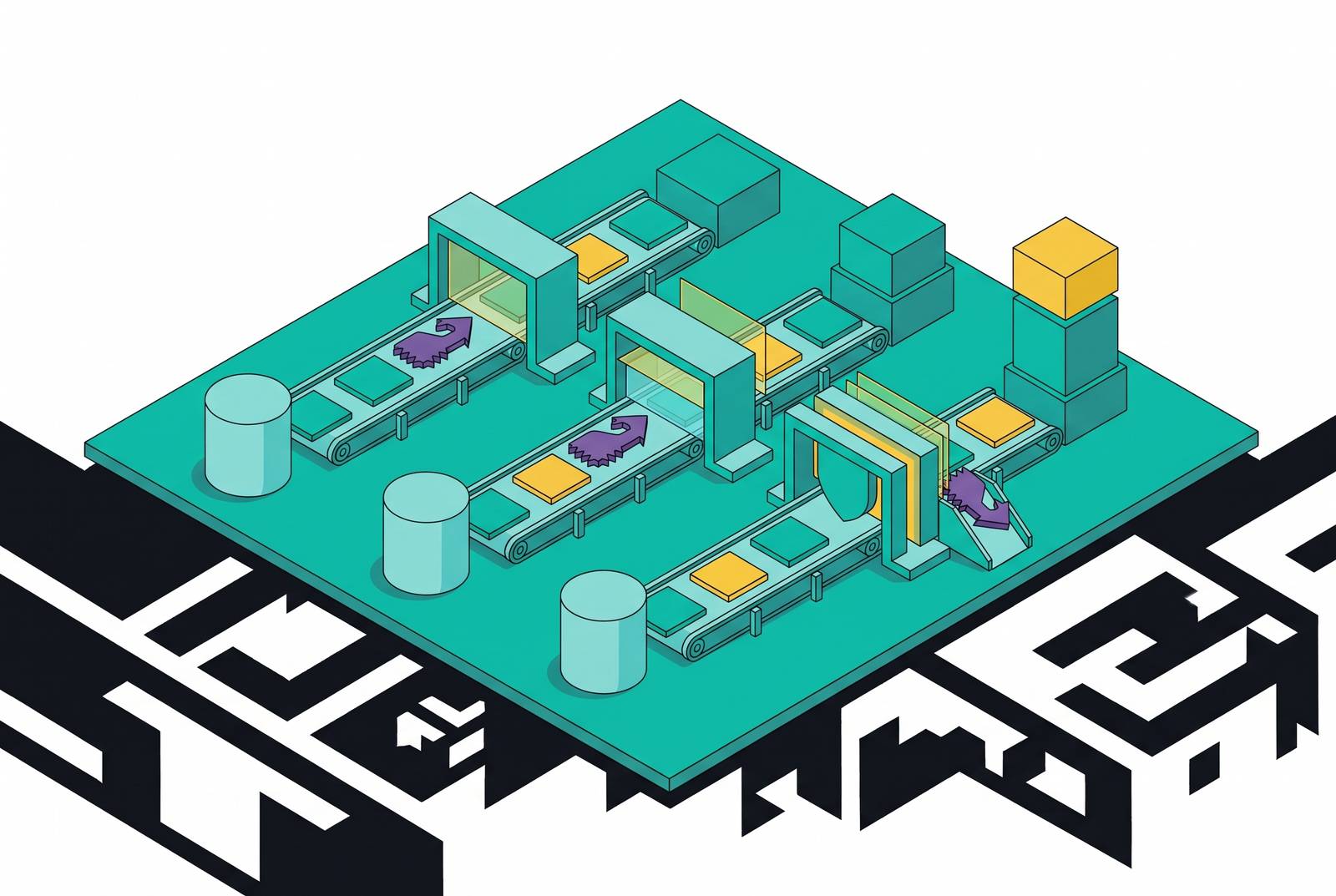
To detect indirect prompt injection in enterprise RAG pipelines, teams must scan retrieved chunks before context assembly as well as filter user prompts or model answers. Vendor evaluation should score that inspection separately from hijack resistance, including identity enforcement, retrieval permissions, and limits on agent tools. No vendor assessed here supplies the complete framework natively, so selection must be paired with integration and continuous monitoring above the vendor layer.
Why RAG pipelines demand a different security lens than traditional data access
An LLM handles retrieved chunks and system instructions in the same context window, with no built-in way to reliably keep data from becoming instruction. RAG’s ability to reflect changes in source documents makes it useful for enterprise knowledge, but also exposes model reasoning to content that changes outside the application. Permission to access a document therefore does not establish that its contents are safe to follow.
Conventional controls see a different slice of the system. DLP, CASB, and perimeter controls can observe application access without seeing embedded instructions or what retrieval surfaced. ISC2’s practitioner analysis treats RAG as a data access layer whose controls should meet the same audit expectations teams know from frameworks such as NIST 800-53. The necessary change is not abandoning access governance, but extending it into chunking, retrieval, and context assembly.
The attack surface RAG vendors must defend against
Chunking can strip away headings, tables, footnotes, and version markers that help establish a document’s meaning and origin. Provenance can disappear with that structure. If classification and permissions also fail to follow the chunks, the vector index becomes a less governed copy of the source system. OWASP LLM08 identifies knowledge base poisoning, embedding inversion, cross-tenant leakage, and retrieval/access-control bypass among the resulting risks.
PoisonedRAG, presented at USENIX Security 2025, demonstrates targeted knowledge corruption through a small number of adversarial documents in a large corpus, making statistical detection impractical. KidnapRAG, by Choi et al. at EMNLP 2026, extends poisoning across iterative retrieval through three role-specific documents named Bait, Chain-Link, and Mal-Ins. The attack follows the agent’s reasoning sequence. Salience Induction takes a different route, reordering or emphasizing true facts to redirect multi-hop reasoning without introducing false facts. A factual-consistency check alone therefore cannot establish that retrieved content has not steered an agent.
How to score chunk inspection depth: five criteria that separate real coverage from surface filtering
The rubric has five criteria, each tied to something a vendor can document or demonstrate. Native coverage should be distinguished from externally integrated coverage, while undocumented claims remain unproven. This avoids giving a platform credit for controls that exist only in a proposed architecture.
The first criterion is source provenance per chunk. A passing demonstration shows source system, document ID, version, owner, classification, and ingestion timestamp attached to each chunk and available for later investigation. The second is pre-context injection scanning of retrieved chunks, no matter how much the source is trusted. Scanning must occur before context assembly, while adversarial instructions can still be blocked, because recording them after use only documents them.
The third criterion is PII classification and redaction at chunking time, before embedding. Query-time masking serves a different purpose. ISC2 describes dynamic redaction based on requester identity without changing stored data, but that does not substitute for inspecting sensitive data before storage. The fourth criterion is source trust tiering, including VERIFIED, INTERNAL, EXTERNAL, and UNVERIFIED, with differentiated handling and explicit trust boundaries. Physically separate indexes for high-trust and low-trust documents provide stronger isolation than filtering within one index.
The fifth criterion is a retrieval audit trail. Evidence should include query identity, returned chunk IDs, similarity scores, timestamp, and source trust level logged to a SIEM. This record connects a response to the retrieval that supplied it and can serve as a compliance artifact under frameworks such as NIS2 for essential-entity operators. Answer quality scores are not an equivalent record.
How to score hijack resistance maturity: from identity collapse to agentic blast radius
ISC2’s practitioner analysis describes an agency team running two successful queries that contained no information about the humans submitting them. The database saw the same service account. Application authentication had failed to carry identity through retrieval, so the database could not tell users apart. This is why hijack resistance must be scored separately from content inspection.
The first criterion is end-user identity propagation. The second is per-user filtering at the vector-database query layer, where unauthorized rows are withheld even when they are the closest semantic match. The third is label-based security, with chunks inheriting source classifications and retrieval refusing content above the requester’s clearance. Rephrasing must not change that permission decision.
The fourth criterion is context trust-boundary enforcement, with clear instructions to treat retrieved chunks as untrusted data and keep them separate from system instructions. That boundary addresses steering through emphasis as well as overt commands, although it is not proof of complete resistance. The fifth is auditable control over who can insert, update, classify, or relabel chunks. These permissions constrain poisoning before retrieval ever begins.
Agentic deployments require an additional scope check. A compromised retrieval step can affect whatever tools the agent is permitted to use, so the potential damage is not limited to an incorrect answer. KidnapRAG challenges the assumption that iterative retrieval is a safeguard by making it part of the threat model. A mature assessment therefore covers a single prompt-response exchange as well as tool permissions and controls for sequential retrieval.
Scoring Vectara: strong auditability, limited pipeline visibility, high entry cost
Vectara has a control that scores each answer through HHEM factual consistency scoring in its Query API. Setting enable_factual_consistency_score to true in the summarization request produces a score that can be logged or used as a gate. This supports answer auditability. It does not show that all five inspection criteria are covered, especially for truth-preserving steering.
A 2026 independent hands-on test limited to cross-tenant isolation reported that separate tenant corpora stayed isolated, with questions that needed another tenant’s documents refused and no documents leaked. Vectara also offers SaaS, VPC, and on-premises deployment options. A choice of deployment can help with regulated workloads, but it does not by itself let teams see into the retrieval pipeline.
The resulting assessment is strong on per-query auditability and limited on pipeline visibility and customizable trust tiering. Per-user retrieval filtering and write-control documentation are not established in the supplied evidence. Cost is a separate selection constraint. The 2025 pricing restructure set a $100,000/year SaaS minimum, placing the service outside the former developer-tier audience.
Scoring Google Cloud Vertex AI: the most layered native stack, with integration complexity as the tradeoff
Google Cloud Vertex AI has the broadest set of relevant controls among these options, but they are spread across services and do not come as one secured pipeline. Cloud Sensitive Data Protection can inspect, classify, and de-identify raw documents, including redaction, when integrated before chunking. Model Armor evaluates incoming prompts for jailbreaks and prompt injections and filters outgoing responses. Retrieved content must reach that inspection path before context assembly for the pipeline to earn credit on the second criterion. The wiring is part of the control.
Vector Search IAM governs which principals can query an index, but does not natively provide per-user document filtering at the database layer. That filtering requires application-layer implementation. Evaluation’s groundedness scoring likewise checks whether answers follow retrieved context, but does not give teams a full retrieval audit trail.
Inspection coverage is consequently strong in redaction, injection scanning, and groundedness tracking, while per-chunk provenance and trust tiering depend on implementation. Hijack resistance requires more than enabling IAM. Agentic coverage also depends on scoped tool permissions. Broader coverage requires deliberate integration.
Scoring Weaviate: architecture-level isolation without native injection scanning
Weaviate supplies architectural controls through multi-tenancy with built-in tenant isolation and RBAC, together with hybrid and multimodal search. These controls give access governance a foundation at the data layer. They do not inspect the meaning of retrieved text. Native chunk-level injection scanning is absent, so that inspection must be integrated externally.
Tenant isolation and RBAC support hijack resistance, but a buyer still needs evidence showing how requester identity and source classifications govern the actual query path. Write-control and agentic coverage are not documented in the supplied evidence. Inspection depth scores low natively, even though an externally assembled stack can score well on the strength of the team’s implementation.
Scoring LlamaIndex: best chunking-time provenance, retrieval-stage injection left to the integrator
LlamaIndex contributes at the framework layer rather than acting as a managed RAG service or vector database. Its hierarchical chunking, Auto-Merging Retriever, and LlamaParse for complex PDFs preserve document structure that flattening can destroy. This makes it a strong provenance foundation. Preserving structure, however, does not by itself demonstrate that every required provenance field is attached and queryable.
LlamaIndex has no built-in retrieval-stage injection scanning, so the integrator must add active inspection. LlamaIndex therefore scores strongly on provenance prerequisites and structure preservation, but poorly on native injection scanning. RBAC and VPC deployment address some security dimensions without establishing database-layer per-user retrieval filtering. The vector store paired with it must enforce that filtering.
Scoring Pinecone: compliance certifications without retrieval-stage content inspection
Pinecone’s security credentials cover how the organization and its operations are controlled, but do not prove that it has the two capabilities scored here. Pinecone’s security page states that it is SOC2 Type II certified, HIPAA compliant with a BAA available upon request, and GDPR-ready. Its Trust Center also lists ISO/IEC 27001 among active compliance frameworks. Those are meaningful procurement inputs. They do not demonstrate inspection of adversarial instructions in retrieved chunks.
Namespace isolation and metadata filtering provide separation, but no retrieval-stage injection scanning is documented in the supplied evidence. The evidence also does not show per-chunk provenance, trust tiering, or database-enforced per-user filtering. Its native score is therefore low on inspection, with partial isolation coverage on hijack resistance. Enterprise BYOC places the data plane in the customer’s cloud VPC for sovereignty and residency needs, although air-gapped and fully self-hosted deployment are not its model. Those deployment distinctions should remain separate from content-inspection claims.
Where no vendor passes all five criteria natively, and what that means for enterprise teams
A framework can preserve provenance without scanning instructions, while a vector database can isolate tenants without examining content. A managed platform can score answers while exposing too little of retrieval for a full audit. These controls are not interchangeable. Even the broadest stack requires integration to inspect retrieved content before context assembly.
Write controls are also underdocumented across the five options. That leaves uncertainty about who can change the corpus or its security labels before downstream checks run. Enterprise teams therefore need to assess the pipeline they have put together and keep making security decisions after procurement. Continuous monitoring cannot stand in for missing enforcement, but it can show changes that a one-time assessment misses.
Vendor stacks change through new connectors, embedding updates, and revised access configurations. Generic governance frameworks do not directly test retrieval-stage scanning, source trust tiering, or database-query enforcement. AI risk intelligence platforms address this monitoring gap by continuously assessing vendor AI assets across the enterprise ecosystem and surfacing AI-specific threats for TPRM, information security, data protection, and Legal teams. Their role is above the vendor layer, where changes across the assembled stack can be assessed together.
A practical scoring checklist for enterprise RAG vendor evaluations
Can every chunk be traced to its source system, document ID, version, owner, classification, and ingestion timestamp? Does scanning inspect retrieved chunks before context assembly regardless of source trust, and is PII classified and redacted before embedding? Can trust tiers trigger different handling, including separate indexes? Does the retrieval record expose query identity, chunk IDs, similarity scores, timestamp, and trust level to a SIEM or equivalent?
For hijack resistance, the questions move from content to authority. Does end-user identity reach the vector store, and are unauthorized rows withheld at the database query layer? Do classification labels prevent retrieval above the requester’s clearance even after rephrasing? Are retrieved chunks consistently marked as untrusted data across retrieval paths, and are insert, update, classification, and relabeling permissions documented and auditable? For agents, what controls limit tool permissions and sequential retrieval attacks?
Documentation or a live demonstration should establish whether each control is native, externally integrated, or unproven. Unverifiable claims are not a passing grade on either axis.
Vendor postures change, and point-in-time assessments age.