Subprocessor Transparency in Enterprise AI Vendor Agreements
Enterprises need contractual visibility into the AI subprocessors handling their data.
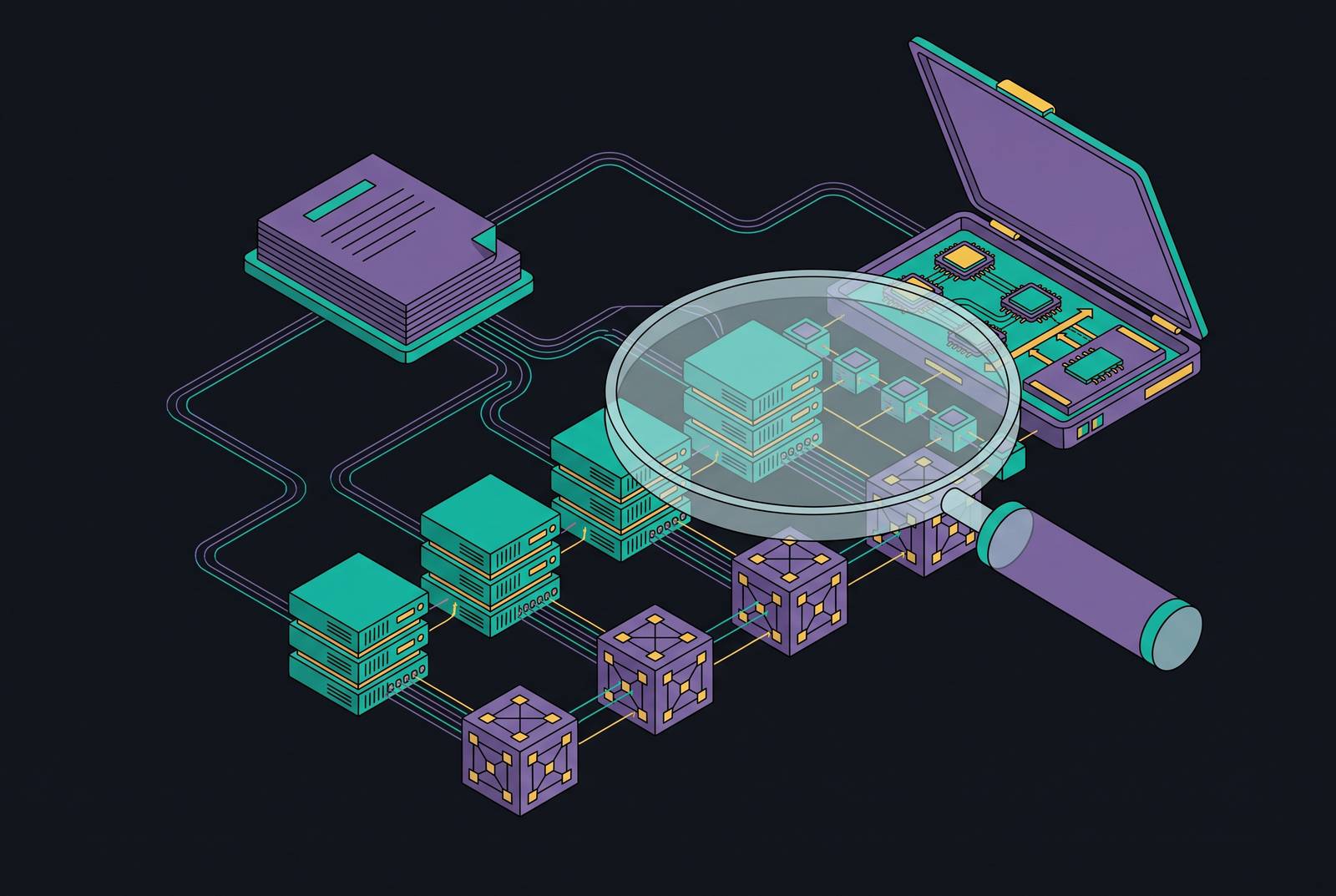
Agreements with Enterprise AI vendors can leave buyers in charge of data flows they cannot see. Traditional data processing agreements were not built for the models, pipelines, and connectors beneath an approved product. Closing that transparency gap requires both enforceable limits on AI subprocessors and continuous oversight of what changes after signing.
Why the standard DPA was never built to see AI subprocessors
The standard data processing agreement, or DPA, assumes that a vendor’s data handling is relatively bounded and stable. A 2022-era agreement addresses who stores data, where it sits, and how long it stays there. Those questions remain necessary, but they no longer suffice. A foundation model API, a vector database holding embeddings, and an observability platform ingesting prompts introduce different uses and copies of the same information. The mismatch begins with the instrument.
When a SaaS vendor enables an AI feature, its processing chain can extend to several providers, each with its own data residency, training policies, and breach notification timelines. An agreement suited to that vendor in 2023 may say nothing about whether inputs train another company’s model or what happens when the model changes. Deletion exposes the gap especially clearly. Removing a source document does not necessarily remove prompts and outputs from logs, embeddings from vector indexes, or cached responses from CDN layers. What, then, does a promise to “delete customer data” actually cover? Unless the agreement addresses those derived representations, the buyer and vendor can attach different meanings to the same obligation.
How AI subprocessor sprawl hides inside already-approved software
That mismatch can put buyers at risk when approved software changes between reviews. A vendor can pass procurement, add an AI toggle, and start sending customer or operational data through a model that was never on the subprocessor list the buyer reviewed. Unlike shadow AI installed covertly by employees, AI subprocessor sprawl sits inside software the organization already trusts. CRM, helpdesk, HR, marketing, and accounting applications are therefore places where a new data flow may not trigger a new approval.
The added feature typically depends on an external foundation model provider, such as OpenAI, Anthropic, or Google, and may also use vector databases or embedding services. The visible application is only the entry point. Consider a recruiting tool whose DPA names one model while the service routes sensitive personal information through two additional, undisclosed models making automated hiring decisions. Due diligence on the named model leaves the other relationships untouched, creating potential FTC and GDPR exposure without another procurement decision. If an employee enables a feature that conflicts with promises made to customers, the organization can also breach its own contracts, including commitments that data will not be processed by AI or leave a defined subprocessor set.
The scale of what vendors are not disclosing and what data is at stake
DataGrail’s research found that most AI-capable vendors had undisclosed subprocessor relationships. Its methodology compared DPA disclosures with product documentation, GitHub environments, API connections, and marketing materials. This comparison distinguishes missing disclosure from mere uncertainty about how a product works. Evidence of external connections helps rule out the claim that an AI feature uses only proprietary technology.
Among AI systems that reported their own risk factors, personal-data processing was common, and a sizeable share also supported automated decision-making. Vendors also reported uses that involved health and financial information and biometric data. These are not just routine operational records. Yet the findings capture only what vendors formally reported, so they likely understate the actual exposure. A buyer cannot reliably judge the consequences of an undisclosed pipeline without knowing both who receives the data and whether that processing shapes a decision about a person.
What GDPR, the EU AI Act, and U.S. state laws now require from AI vendor contracts
The legal consequence begins with obligations that already exist. GDPR Article 28(3) requires processing to be governed by a contract or other legal act, while Article 28(9) requires that instrument to be in writing, including electronic form. A generic reference to GDPR does not explain an undisclosed AI chain. The contractual relationship has to address the processing actually taking place, rather than merely preserve the description approved at procurement. Otherwise, the agreement and the service diverge precisely where the buyer needs accountability.
For a service built on such a model, the contractual response is a GPAI clause warranting that the model provider meets the applicable obligations and makes required documentation available. That warranty does not replace compliance itself. Nor does it automatically make every regulatory duty a term of the contract. Its purpose is to make the vendor answerable for conditions in a model relationship the buyer cannot directly negotiate.
Texas’s TRAIGA took effect January 1, 2026, and only the Texas Attorney General can enforce it through civil penalties, including penalties that continue each day. California’s regulations have also been in effect since January 1, 2026, with the first attestation due April 1, 2028. A privacy impact assessment attested under penalty of perjury needs to reflect actual AI data flows, including subprocessors. If a vendor leaves details out of its disclosure, the buyer may give an inaccurate account of its own processing.
Sector rules sharpen the consequences further. The New York Department of Financial Services issued guidance in October 2025 recommending that covered entities consider how AI is used in vendor contracts, spell out audit rights, and check how vendors handle cybersecurity. Healthcare and defense illustrate the underlying risk. Patient data routed through undisclosed model-training subprocessors may create a HIPAA violation without an alert, while CUI routed through undisclosed AI subprocessors may cross CMMC boundaries silently. Across these settings, a signed agreement cannot substitute for an accurate understanding of the service.
What an enforceable AI subprocessor clause must contain
For teams translating those obligations into contract language, two provisions anchor the rest. The agreement needs an explicit list of authorized subprocessors and a prohibition on training use without prior written consent. The list establishes who may receive the data. The training carve-out must cover customer data, inputs, outputs, and derived artifacts used to train, retrain, fine-tune, evaluate, or improve any model. It must cover both the company named on the contract and the vendor’s own models, upstream providers, and downstream subprocessors.
The written restriction also needs to stand apart from sales assurances or privacy-policy summaries. Consumer-tier and free-tier terms can differ materially from enterprise API terms, so a general promise about a product is not enough. The authorized list then needs a change mechanism. The vendor should maintain a current list at a published URL and provide at least 30 days’ advance notice before authorizing a new subprocessor that processes customer data, with a right to object in writing. OpenAI’s January 2026 DPA provides a 30-day notice and objection model, while Microsoft has signaled a separate 30-day notice track for AI subprocessors.
Flow-down terms should impose the same data protection, security, and confidentiality duties on each subprocessor, with the vendor bearing primary liability for its acts or omissions. Deletion must be equally specific. The clause should set retention periods for prompts, outputs, and logs, require deletion of embeddings and derived representations within a defined window after source deletion, and require written certification after termination. It should also prohibit backup copies beyond a defined rotation period, imposing a duty that exceeds “commercially reasonable efforts.
AI-specific incident triggers should include prompt injection causing unauthorized access, jailbreaks producing policy-violating outputs, PII in shared evaluation sets, downstream training contamination, and known-bad outputs the vendor remediated. Notification should be prompt across these categories. Audit access should name model cards, red-team results, bias-testing methodology, security certifications and audit reports, penetration tests, and AI governance documentation. The buyer should also retain the right to request vendor-subprocessor contracts, so that warranted upstream protections can also be inspected.
The agentic AI objection: when vendors claim they cannot control their own subprocessors
An agentic AI vendor may object that it cannot promise protections over a model it does not own. The commercial constraint can be real. A provider may buy access on standard enterprise terms, have little power to change those terms, and get model-change notices at the same time as everyone else. Why should it give a warranty for something it cannot control through its technology? The question deserves an answer, but it joins two distinct issues, namely control over the model and responsibility for selling a service that depends on it.
The cloud infrastructure analogy helps separate them. Early SaaS providers depending on AWS argued that an upstream outage was not their responsibility, while buyers eventually required SLAs allocating risk regardless of its upstream cause. The AI contract response follows that distinction. Buyers can require warranties that upstream agreements contain the needed protections, notice of changes affecting those warranties, and indemnification for training-carve-out breaches regardless of which layer caused them. If the model provider’s terms genuinely prevent a training carve-out, that is a substantive risk disclosure to include in the contract, potentially decisive for regulated-data use.
Why contract language alone cannot close the transparency gap after signing
Even an agreement that allocates risk well describes the subprocessor landscape at a particular moment. The vendor can still add features, connectors, or model versions between contract reviews. Someone needs to watch for the notices required by the notice clause. Similarly, an underlying model update can alter system behavior, affecting risk assessment, bias monitoring, and automated decisions. Model-update notification needs to do more than record that the vendor sent an email: it must allow for re-validation before the change reaches production use.
For teams putting these rights into operation, monitoring starts with the business consequence of a supplier’s failure or change. Suppliers should be tiered on that basis, assurance evidence tested against the actual service, and conditions that would invalidate approval documented and tracked. Technical visibility complements that work. Detecting a new endpoint or an AI subprocessor appearing in API connections can expose a change that a notice clause was meant to surface but did not.
Traditional third-party risk management tools were built around assessments at a point in time and reviews on a calendar. That approach does not address every quiet change in an AI stack, including new connectors and training policies applied to existing data. Continuous AI risk intelligence fills a different role. By monitoring vendor AI assets and detecting changes in subprocessor relationships, it gives legal and operational teams evidence with which to exercise their rights.
A practical starting point for legal, privacy, and security teams
Legal teams can begin with agreements approaching review or renewal, treating any DPA written before 2024 as presumptively insufficient for an AI vendor relationship. The review should check for the AI-specific provisions above as well as GDPR Article 28 boilerplate. Refusal to disclose subprocessors is a substantive risk signal. So is refusal to put a training carve-out in writing. Where the service rests on a general-purpose model, the agreement should also include the GPAI warranty and documentation requirement.
Privacy teams can establish a running AI subprocessor register, update it when notices arrive, and connect it to privacy impact assessments. Existing approved vendors need attention too. Comparing DPAs with product documentation, GitHub environments, and API connections can help identify AI features introduced since the last full review. Within that work, vendors processing sensitive data or supporting automated decisions deserve priority because of their regulatory exposure.
Security and TPRM teams can then allocate monitoring by business consequence, with continuous review for vendors processing regulated data or powering automated decisions. Model-update notices should prompt re-validation so that the original security approval does not automatically carry over to the updated model. This requires a shared operating picture. Legal’s objection rights, privacy’s data-flow map, and what security sees all need to reflect the same vendor relationship as it changes. Sequential reviews in separate files cannot provide that coordination, but a single, continuously updated view of the AI vendor stack can give each team the evidence it needs to act.